Guides / Running a Group Buy
The End of US De Minimis and What It Does to a Keyboard Group Buy
October 30, 2026
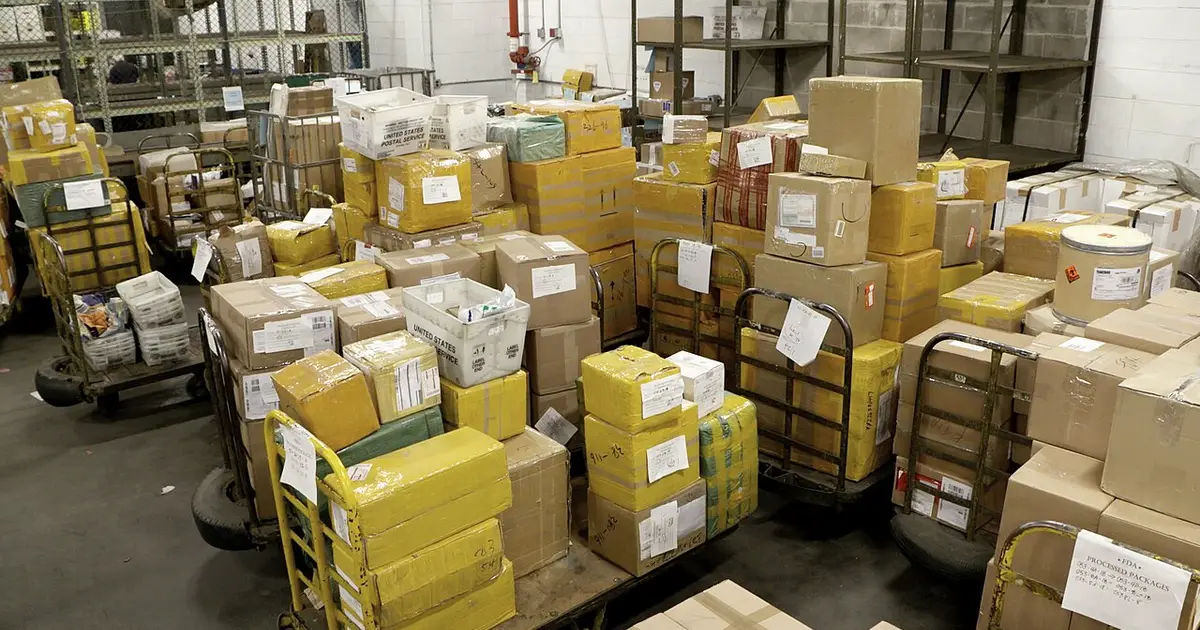
The US duty-free de minimis exemption, which let a parcel worth $800 or less enter without duty, is suspended for every country of origin. It has been suspended for commercial shipments since 29 August 2025 and, as of October 2026, it is still suspended. For a keyboard group buy this means that a case, plate or weight shipped to a US backer needs a customs entry and pays whatever duty its tariff code and origin attract. The small-parcel shortcut that many runs relied on no longer exists.
This guide sets out what changed and when, what the rules require of a parcel today and how a group buy organiser should structure shipping so the buyer is not surprised at the door. It is written for people who plan runs and place orders with machine shops. It is not legal advice and it does not replace a customs broker.
What changed, in order
The rule moved in steps. The dates below come from the White House fact sheet, the Federal Register, the US Government Accountability Office and CBP’s own e-commerce FAQ.
| Date | What happened | Source |
|---|---|---|
| 30 July 2025 | Executive Order 14324 signed. Duty-free de minimis suspended for all countries from 29 August 2025 for goods of $800 or less that do not travel by international post | White House fact sheet |
| 2 September 2025 | CBP notice published. Non-postal low-value goods need an appropriate entry in ACE filed by a qualified party. Entry Type 86 may no longer be used | Federal Register |
| 20 February 2026 | Executive Order 14388 signed, published 25 February. It continues the suspension for all countries. Postal shipments pay a duty set in the order until CBP’s new postal entry process takes effect | Federal Register |
| 24 June 2026 | CBP publishes a rule suspending de minimis for postal shipments indefinitely | GAO report on the rule |
| 24 July 2026 | Most of that rule takes effect, with a new informal entry process for mail | GAO and CBP FAQ |
| 22 October 2026 | Certain goods become ineligible for the mail informal entry process (see below) | CBP FAQ |
The suspension has no end date. GAO describes the postal suspension as indefinite, and the later orders extend rather than relax the earlier one.
What the rule asks of a parcel now
CBP’s e-commerce FAQ, last modified in September 2026, states the position plainly. Merchandise valued at $800 or less that used to qualify for de minimis must now go through formal or informal entry. Informal entry is generally available for shipments of $2,500 or less. Formal entry is required above $2,500 and for certain goods, such as items subject to quotas or antidumping and countervailing duties.
Three practical points follow for a keyboard run.
- A parcel is an entry. The goods are declared with a value, a country of origin and a 10-digit tariff classification. CBP’s data list for the mail process includes the 10-digit HTSUS code, the value, the bond number and the duty owed.
- Someone needs a bond. The FAQ requires an effective basic importation bond before any activity on the mail process. Parcels lacking required data or a bond are not released from CBP custody.
- The filer is the owner, the purchaser or their broker. The FAQ names the owner or purchaser of the goods, or a licensed customs broker properly designated by them, as the party that may file. Which of those it is for a given backer depends on how the vendor ships and who the seller names as importer.
CBP also notes that mail is exempt from the merchandise processing fee, except Inbound Express Mail Service. That exemption is specific to the mail process. A formal entry on a pallet is a different transaction with its own fees, and no public benchmark exists for broker charges on a keyboard shipment, so get written quotes.
The 22 October 2026 change
From 22 October 2026, four categories of goods can no longer use the new mail informal entry process:
- goods claiming duty-free treatment under HTSUS Chapter 98;
- goods subject to duties under Chapter 98 or Chapter 99;
- goods claiming duty-free treatment under a free trade agreement;
- goods subject to Partner Government Agency requirements.
Those goods must use another route, such as a formal entry or Entry Type 13, a voluntary electronic informal entry for mail that CBP is testing. Chapter 99 is where additional tariffs sit in the schedule, so whether this touches your case depends on the code you declare and the origin of the goods. Read the current schedule or ask a broker rather than assuming. Before 22 October, filers may still use the mail informal process for these goods but must submit the extra data.
Three ways a group buy can ship
The rule does not tell you how to run your shipping. It sets the costs of each choice. These are the three structures organisers usually compare.
Parcel by parcel from overseas. The vendor or the shop ships each backer’s order directly. Every parcel is its own entry, so duty, data and any broker work repeat once per backer. This is the route that changed most. Ask who is the importer of record on each parcel, because that party carries the filing duty.
One bulk shipment, then domestic parcels. The run travels to the organiser or a US warehouse as one commercial shipment. There is a single entry, and the domestic parcels after that carry no customs process. A run whose declared value passes $2,500 needs a formal entry under CBP’s guidance, so expect a bond and a broker. The trade-off is working capital, storage and the time the cases spend in transit before any backer sees them.
Delivered duty paid (DDP). The seller collects the duty at checkout and files on the backer’s behalf. It is simple for the backer and it puts the compliance work on the seller. It only works if the checkout price includes a duty estimate that holds when the goods arrive.
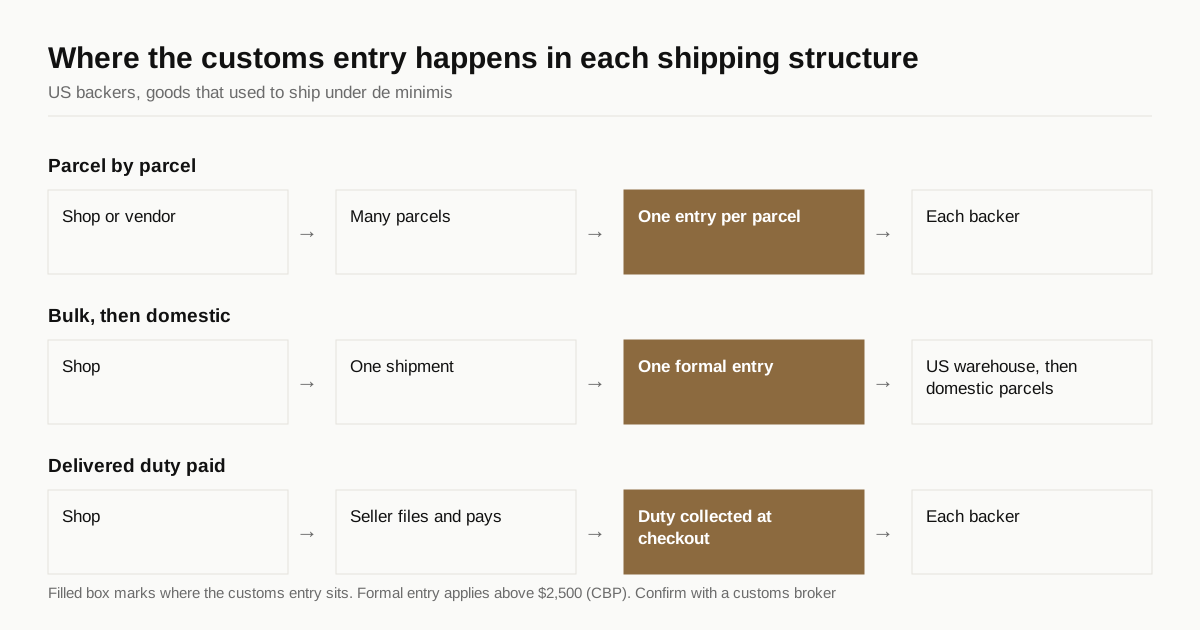
None of these is free. They move the cost to different places, and the right choice depends on run size, destination mix and who is willing to hold the filing risk.
What the duty depends on
Duty is not a function of parcel value any more than it ever was. It follows the tariff code, the country of origin and any additional measures on that combination. For the codes a keyboard case is likely to use, and for why the code matters, see the keyboard case HS code and duty guide. Rates and additional measures have changed several times since 2025, so treat any number you read, including in group buy threads, as a snapshot.
A checklist for organisers
Settle these before the interest check closes, not after the cases ship.
- Shipping structure chosen: parcel by parcel, bulk then domestic or DDP
- Importer of record named in writing for every shipment
- Tariff code agreed with the shop or broker and printed on the commercial invoice
- Declared value matches the price actually paid for the goods
- Price page says whether duty is included or extra
- A written rule for what happens if duty changes between pre-order and delivery
- Broker quote in hand for any bulk entry
- Entry paperwork kept for each shipment
What this means for ordering from a shop
The shop quote and the shipping terms are separate documents. Ask each shop which Incoterm its quote uses, and whether the quote includes export clearance, freight or anything past the dock. How a case is quoted and what a minimum order really is both change once import cost is added on top. A small run that looked cheap per unit can look very different once each unit carries its own entry.
If you are planning a run and want to compare shops on a drawing, send the files through the RFQ form. We match the request with up to 3 shops and reply within 24 business hours. We do not file customs entries or ship for you.
See also: importing keyboard cases into the US, which adds the tariff line and the Section 301 and Section 232 layers to the entry rules.
Sources
- White House fact sheet on suspending de minimis for commercial shipments, 30 July 2025
- Federal Register, CBP implementation notice, 2 September 2025
- Federal Register, Executive Order 14388, 25 February 2026
- GAO, indefinite suspension of the de minimis exemption for mail shipments
- CBP e-commerce frequently asked questions
Status as of October 2026. Confirm entry rules and duty with a licensed customs broker before you publish prices.
Entry rules are one part of the full budget in our guide to keyboard case manufacturing cost.
Frequently asked questions
Is US de minimis still suspended for keyboard parts?
Yes, as of October 2026. CBP's e-commerce FAQ says goods valued at $800 or less now need a formal or informal entry whatever the mode of shipping, and the postal suspension is indefinite. Confirm the current status with a customs broker before you publish a price, because the rules have changed several times since July 2025.
Do keyboard cases under $800 pay duty now?
They need a customs entry, and they pay whatever duty their tariff code and country of origin attract. The base rate for the likely codes can be free, but additional duties can sit on top. The amount is decided by the code, not by the parcel value. Check it before the group buy opens.
Who files the customs entry for a parcel to a US backer?
CBP says the owner or purchaser of the goods, or a licensed customs broker they designate, may file. In practice the carrier, the vendor's shipping terms and the seller's checkout decide who does the work and who pays. Ask for the importer of record in writing before you pre-order.
Can a group buy still ship parcel by parcel from overseas?
It can, but every parcel is now a separate entry with its own duty and its own data requirements. Many organisers compare that with one bulk shipment into a US warehouse and domestic parcels afterwards. Price both routes on real quotes before choosing one.
Need a quote for your case?
Send the files. We match you with up to 3 shops that machine keyboard cases and reply within 24 business hours.
Get matched with a keyboard case shop