Guides / Cost
Which HS Code Does a Machined Keyboard Case Ship Under?
November 1, 2026
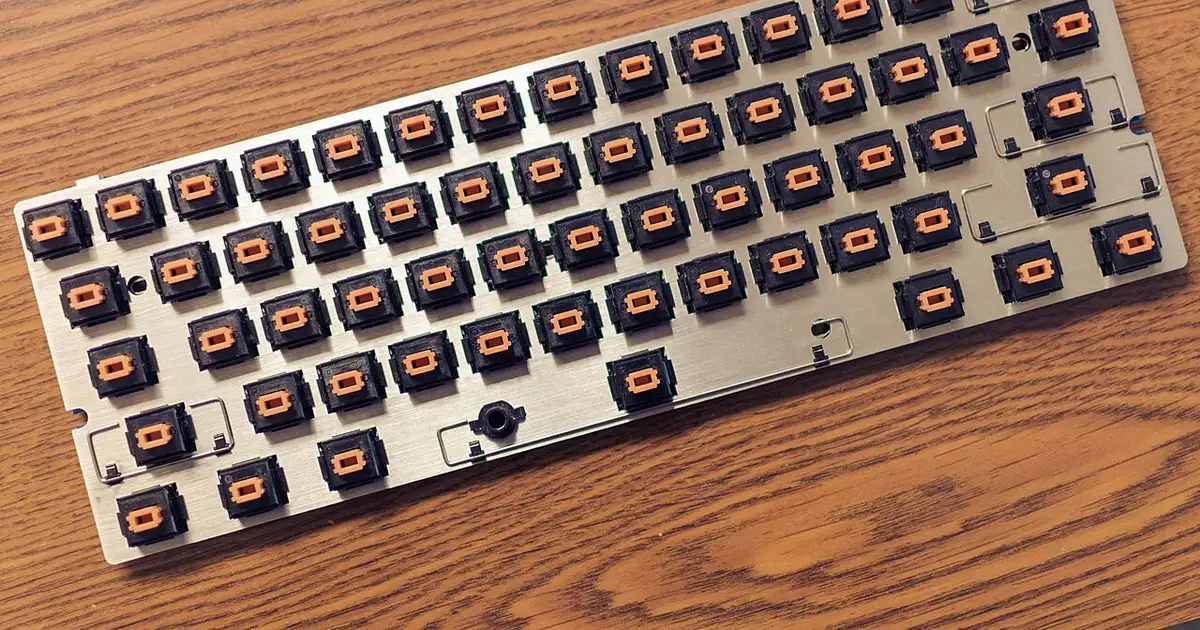
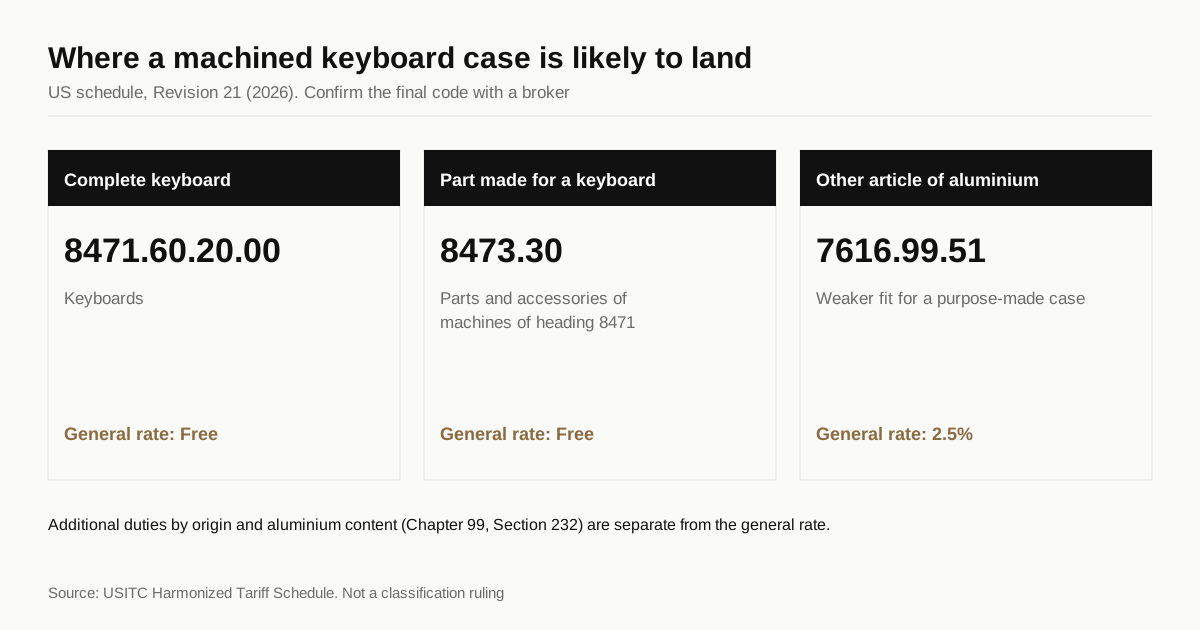
No HS code is made for a keyboard case. A complete keyboard classifies under heading 8471, subheading 8471.60, and a bare aluminium case made for keyboards is most naturally a part of that machine. In the US schedule that points to subheading 8473.30, not to the broad line for other articles of aluminium. The general duty rate for the keyboard line and for the parts line is free, but additional duties tied to origin and aluminium content can sit on top, and the code you declare is your responsibility.
This guide shows the lines a case could fall under, the notes that decide between them and what to put on an invoice so the shipment is not held up. It uses the US schedule. It is not a classification ruling, and a licensed customs broker should confirm the final code.
The lines in play
The US lines below come from the Harmonized Tariff Schedule of the United States on the USITC site (Revision 21, 2026). The first six digits belong to the Harmonized System, which the World Customs Organization says is used by about 200 countries and economies. The extra digits and the rates are national.
| HTS line | Text | US general rate |
|---|---|---|
| 8471.60.20.00 | Keyboards | Free |
| 8473.30.20.00 | Parts and accessories, including face plates and lock latches, of printed circuit assemblies | Free |
| 8473.30.51.00 | Other parts and accessories of the machines of heading 8471 | Free |
| 7616.99.51 | Other articles of aluminium | 2.5% |
The heading text for 8473 matters: it covers parts and accessories “other than covers, carrying cases and the like” suitable for use solely or principally with machines of headings 8470 to 8472. That wording is the grey area for housings. A case is a structural part, but some brokers read a top case as a cover. Nothing in the schedule settles that for you, which is why the written reasoning matters as much as the number.
Why a case reads as a keyboard part
Three notes in the schedule do the work.
Chapter 84 Note 6(C) says keyboards that can connect to the processing unit and can deliver data in a usable form “are in all cases to be classified as units of heading 8471”. That is why a finished keyboard goes to 8471.60.20.
Section XVI Note 2(b) covers parts that are not themselves named in a Chapter 84 or 85 heading. If such a part is suitable for use solely or principally with a particular kind of machine, it goes with that machine, or into heading 8473 and a few others “as appropriate”. A case cut to one keyboard layout only suits a keyboard.
Section XVI Note 1(g) takes parts of general use, as defined in Section XV, out of Section XVI. Standard hardware is what that term is aimed at, and a case machined to one layout is not standard hardware, so read the definition in the schedule yourself. That is why 7616.99, which sits in Section XV, is the weaker fit for a purpose-made case.
HM Revenue and Customs rulings show the same logic for finished goods. One UK advance ruling places a metal-bodied keyboard with a rotary dial in 8471 60, and another places a plastic wireless keyboard with a folding cover in the same subheading. UK rulings do not bind US Customs, but they show how the six-digit heading is applied to keyboards of different materials.
What changes with what you ship
The code follows the goods as they travel, not the project name. Use the table as a conversation starter with a broker, not as an answer.
| What is in the box | Likely starting point | What to ask |
|---|---|---|
| Complete assembled keyboard | 8471.60.20 | Confirm the keyboard meets Note 6 conditions |
| Bare case, plate or weight | 8473.30 | Does the broker treat a case as a part or as a cover? |
| Kit with case, plate and PCB but no switches or keycaps | Broker call | Does the kit keep the character of a keyboard? |
| Keycaps, switches, stabilisers | Their own lines | Each has a separate classification |
| Loose screws and standoffs | Their own lines | General hardware is handled separately |
A mixed shipment is classified line by line on the invoice, so a clear packing list saves arguments. The same case is also affected by what the finish adds to the cost, but the finish does not change the code.
Why the base rate is not the whole story
The table shows free general rates for the keyboard and parts lines and 2.5% for 7616.99.51. On a plain reading, classification alone moves a case from free to dutiable, which is why the choice is worth getting right. It is also not the end of the calculation.
Additional duties sit in Chapter 99 of the schedule and depend on country of origin. Section 232 duties on aluminium derivative products are another layer. CBP’s aluminium guidance, last modified in September 2026, says coverage is determined by HTS classification, that only codes defined in the presidential proclamation are reported for the additional duty and that duties are assessed at the ad valorem rates tied to the subheading. So the code you pick decides whether a derivative list applies. Check your 10-digit line against the current list, not against a forum thread.
Since duty-free de minimis ended, even a single parcel needs an entry with its code and value. How that works for a group buy is covered in its own guide.
What to put on the invoice and the RFQ
A shipment is held up by a vague description faster than by a high rate. Ask every shop to put the following on the commercial invoice.
- Plain description: “CNC machined aluminium case for mechanical keyboard”, not “parts” or “samples”.
- Material and finish: alloy and temper, and the finish, for example 6061-T6, anodised.
- Function: which keyboard layout or product the part is made for.
- Quantity, unit price and total: the price actually paid for the goods.
- Country of origin: where the part was made.
- Proposed code: six digits at minimum, marked “to be confirmed”, with the 10-digit US line added by the broker.
CBP’s mail entry data list includes the 10-digit HTSUS classification, the value and the country of origin, so these fields are not optional on a US entry.
When you want certainty
If a run is large enough that a wrong code would hurt, ask CBP. Its rulings program issues written rulings, and the CROSS database holds past rulings that may be close to your goods. A broker can search it and tell you how long a request takes. For smaller runs, a broker’s written classification note is usually enough.
Do not use a code because another group buy used it. The code belongs to the goods in your box, and the importer of record answers for it.
Where this fits in planning a run
The tariff line is one input to what a case costs landed, alongside machining, finishing and freight. Duty is one line of the landed price in our guide to keyboard case manufacturing cost. The case cost estimator shows the machining and finishing side. When you are ready to compare shops on a drawing, send the files through the RFQ form. We match the request with up to 3 shops and reply within 24 business hours. We do not classify goods or file customs entries.
Sources
- USITC, Harmonized Tariff Schedule of the United States
- USITC, HTS Chapter 84 with Section XVI notes (Revision 21, 2026)
- World Customs Organization, what is the Harmonized System
- UK advance tariff ruling 600009045, metal keyboard with dial
- UK advance tariff ruling 600010128, wireless keyboard with cover
- CBP, rulings and the CROSS database
- CBP, Section 232 aluminium and steel FAQs
- CBP, e-commerce FAQ with mail entry data requirements
Status as of October 2026. Confirm the code and the duty with a licensed customs broker.
Frequently asked questions
What is the HS code for a keyboard case?
No code names a keyboard case. A complete keyboard sits in heading 8471, subheading 8471.60. A bare case made for keyboards is a part of that machine, which points to subheading 8473.30 in the US schedule. The declared code is the importer's responsibility, so confirm it with a broker.
Is an aluminium keyboard case classified as an aluminium article?
Usually not. Chapter 76 covers articles of aluminium, but the notes to Section XVI send a part made for one kind of machine to that machine or to heading 8473. A custom-cut case is not general hardware. Some brokers still argue the other way for plain housings, so ask for the reasoning in writing.
Does a keyboard case pay import duty in the US?
The general rate for keyboards under 8471.60.20 and for parts under 8473.30 is free in the schedule. Additional duties linked to country of origin or aluminium content can still apply, and they change often. Check the 10-digit code against the current schedule and CBP's aluminium guidance before you set a price.
Do I need a 10-digit code for a US shipment?
Yes. The first six digits are shared worldwide, but a US entry carries the 10-digit HTSUS classification. CBP's mail entry data list includes it. Ask your broker or the seller which 10-digit line they declare, and keep it consistent across the run.
Need a quote for your case?
Send the files. We match you with up to 3 shops that machine keyboard cases and reply within 24 business hours.
Get matched with a keyboard case shop