Guides / Materials
Zinc Alloy Die Cast or Machined Aluminium: Which Keyboard Case?
October 28, 2026
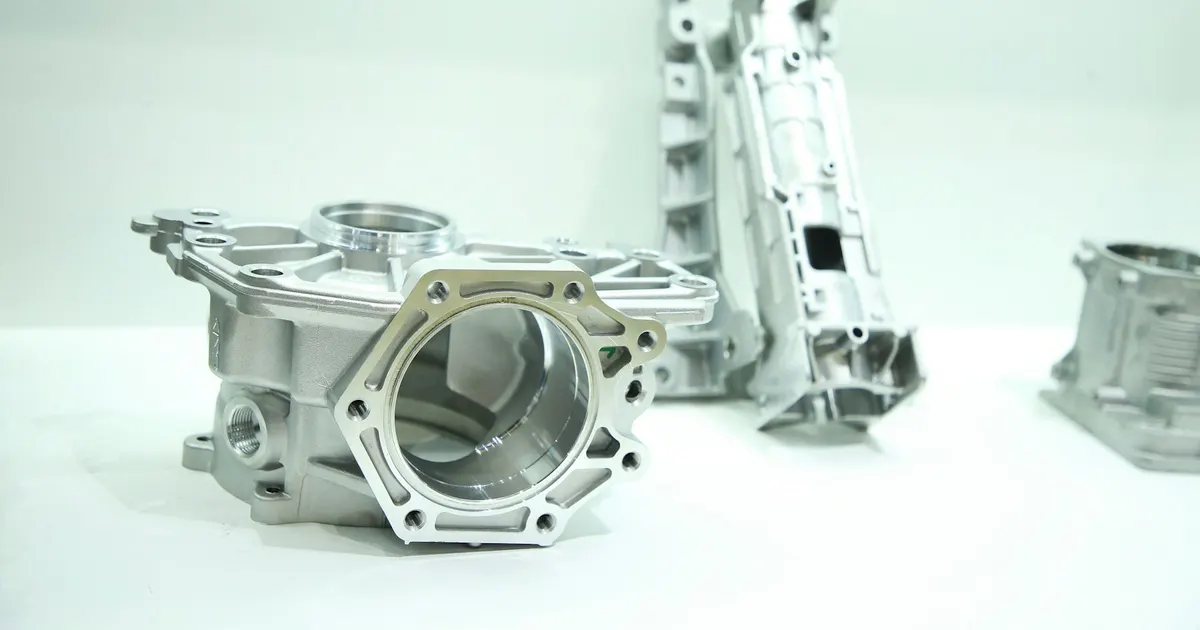
Many entry-level mechanical keyboards are sold in zinc alloy cases, and designers often ask whether they can do the same. The idea makes sense. A cast case can be made in seconds, comes out close to its final shape and weighs a lot, which many buyers equate with quality.
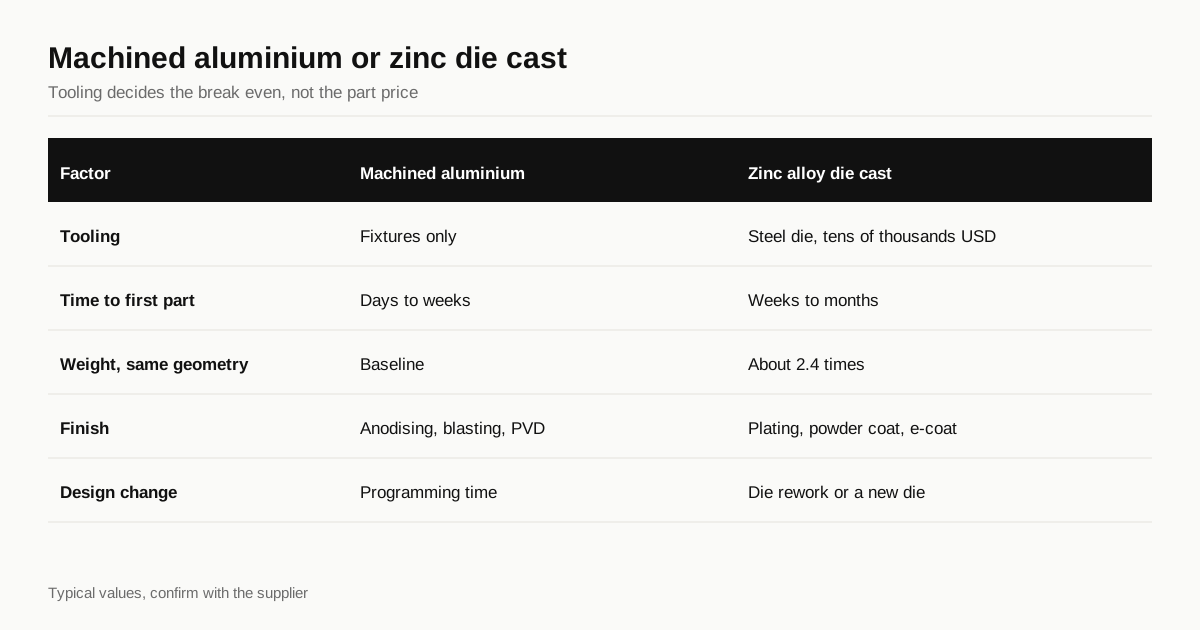
The catch is the up-front cost. Die casting and CNC machining sit at opposite ends of a cost curve, and the crossover point is a number most group buys never reach. This guide explains how the two compare and where the line sits.
How the two processes work
CNC machining removes metal from a solid block with cutting tools. There is no tooling beyond fixtures, so the first case costs the same as the hundredth and a design change costs only programming time. The price of each case is high because of the cutting time.
Die casting injects molten metal into a steel mould, called a die, under pressure. The metal solidifies in seconds and the part is ejected. The die is expensive to make and takes weeks, but each part after that is quick and cheap. Zinc alloys are cast on a hot chamber machine at fairly low temperatures, and the common alloy family is known by the trade name Zamak.
One more distinction matters. Die casting gets a part close to its final shape, but a case still needs surface work. The casting has parting lines, ejector marks, a slight draft on every wall and a skin that must be prepared before a decorative finish goes on.
What the numbers look like
These are typical differences, not a quote, and they vary by supplier.
| Factor | Machined aluminium | Zinc alloy die cast |
|---|---|---|
| Tooling | Fixtures only | Steel die, usually tens of thousands of dollars for a case |
| Time to first part | Days to a few weeks | Several weeks to a few months |
| Price per part at 100 | High | Not practical |
| Price per part at 10,000 | Still high | Low |
| Density | 2.70 g/cm³ | about 6.6 g/cm³ |
| Weight, same geometry | Baseline | about 2.4 times |
| Wall thickness | Down to about 1.5 mm in a cosmetic case | Thin walls possible, about 1 mm |
| Draft angle | Not needed | About 0.5 to 1 degree on walls |
| Finishing | Anodising, blasting, PVD | Plating, powder coat, paint, e-coat |
| Cost of a design change | Programming time | New die or die modification |
The two points that decide most projects are the tooling cost and the cost of a change. A die commits you to the design. A mistake found after tooling means rework on the die or a new one.
The break even point
The sums are simple. A die has a fixed cost, and each cast case saves a certain amount against the machined case. The break even quantity is the die cost divided by that saving.
An illustration with assumed figures: if a die cost 20,000 USD and each cast case cost 15 USD less than a machined one, the die would be paid back after about 1,300 cases. A real project has more terms, such as the cost of finishing the casting, machining the details that cast alone cannot give and the cost of a second die for a bottom case, but the shape of the sum stays the same.
A group buy typically runs a few hundred cases. At that scale the die never pays back, and machined aluminium wins. Minimum order sizes for machined parts are discussed in keyboard case MOQ, and a few hundred is well within them.
Weight and feel
Zinc alloy is about two and a half times as dense as aluminium. A case of the same geometry is correspondingly heavier, and cast cases often feel substantial in the hand. That weight is part of their reputation.
It is also a tradeoff. The board costs more to ship, and a heavy case that is not carefully packed does more damage in a drop. If the goal is weight, a machined aluminium case with a brass weight is an alternative, and brass keyboard weight covers that route.
Finishing a zinc casting
Zinc cannot be anodised, so the finishing path differs entirely from aluminium.
- Plating. Nickel or chrome over copper gives a bright metallic surface. It needs a very smooth, pore free casting underneath.
- Powder coating or paint. Builds a coloured film that hides small surface defects.
- E-coating. An electrophoretic coating that gives a thin, even finish. See e-coat versus anodising for how it behaves on metal parts.
- Polishing and blasting. Smooths the cast skin before another finish goes on.
The weak point of a casting is porosity. Small gas pockets can sit just under the surface, and a coating applied over them can blister or show pinholes. A good caster controls it, and a good finisher checks for it, but it is the main reason cast case finishes vary in quality.
The cosmetic look of anodised aluminium, a soft matte colour with a metallic undertone, is not available on zinc. If your design depends on that look, a zinc case is a different product.
Design differences
Casting rules shape the design in ways machining does not.
- Draft. Walls must lean slightly so the part can leave the die. Vertical walls need a small angle.
- Uniform walls. Thick and thin sections cool at different rates and cause shrink marks and porosity.
- No undercuts without moving slides in the die, which add cost.
- Parting lines. The seam where the die halves meet leaves a line that needs finishing.
- Details are machined afterwards. Threads, plate pockets and tight fits are usually machined after casting, which adds a second process.
The list explains why a cast case is rarely finished straight from the die. A design for casting is a different drawing from a design for machining, and converting one into the other takes time and money.
What a first article from a die tells you
When a die is finished, the caster produces first shots and the buyer inspects them. This stage decides whether the die is accepted, and it is worth knowing what to look for.
- Fill. Thin sections and corners should be complete, without short fills or cold lines where two metal fronts met.
- Flash and parting lines. A little flash is normal and is trimmed. A heavy parting line on a visible face is a design decision to revisit.
- Porosity. Cutting a sample open shows gas pockets. A few small ones deep in the wall are common, while a spread of them near the surface is a finishing risk.
- Flatness and warp. A long, thin case can warp as it cools. Measure the mounting faces against a flat plate.
- Dimensions. Check the fits that matter, such as the plate pocket and the screw bosses, against the drawing, and note which features will need machining afterwards.
A die can usually be adjusted a little after the first shots, by polishing, adding vents or changing a gate, but major changes cost real money. The same attitude towards a prototype applies here with larger sums, and a machined prototype in aluminium before the die is a cheap way to find design faults that a die would lock in.
Questions for a caster
- What do you quote for the die, and what does it include: design for casting, trial shots, a first article report?
- Who owns the die and where does it stay when the run ends?
- What is the minimum order per run and the price at that quantity?
- How do you control porosity, and can the finish you propose go over it?
- Which features will be machined after casting, and who does that work?
- What is the lead time to first shots, and to production parts?
Ownership of the die is a point many first-time buyers miss. A die belongs to whoever pays for it by agreement, and the agreement should say where it is stored, who may use it and what happens if the supplier closes. Get it in writing.
A middle route
If you want a cast case without the risk of a large die, three alternatives exist.
- Aluminium die casting. Lighter than zinc, but the alloys used are poor for decorative anodising.
- Machined aluminium for the first run, with a die made only after the product sells. This keeps the early cost low and the design flexible.
- Cast small parts only. Weights, badges and brackets are small and suit casting at lower tooling cost than a full case.
Many designs use machined aluminium for the case and cast zinc for a badge or a weight.
Before you decide
- Expected volume over the life of the product written down
- Die quote requested, including the finish and the machining after casting
- Machined aluminium quote requested at the same quantity
- Break even worked out from real numbers
- Finish chosen and confirmed as suitable for zinc
- Weight and shipping cost considered
Zinc is one option in our guide to keyboard case materials.
If the volume is a few hundred, send the files through the RFQ form and we will match them with shops that machine cosmetic aluminium cases.
Frequently asked questions
Is a zinc alloy keyboard case cheaper than aluminium?
Per part at high volume, usually yes, because casting is fast and needs little machining. Before the first part exists you must pay for a steel die, so at group buy quantities a machined aluminium case is normally cheaper in total.
Can a zinc alloy keyboard case be anodised?
No. Anodising works on aluminium, titanium and a few other metals, not on zinc. Zinc cases are plated, painted, powder coated or e-coated, and the finish quality depends on how smooth and pore free the casting is.
How many cases do I need before die casting makes sense?
It depends on the die cost and the saving per part, but the break even is usually in the thousands. Runs of a few hundred, which is typical for a group buy, rarely justify a die.
Need a quote for your case?
Send the files. We match you with up to 3 shops that machine keyboard cases and reply within 24 business hours.
Get matched with a keyboard case shop