Guides / Materials
Titanium Keyboard Cases: Machining Cost and Finish Options
October 24, 2026
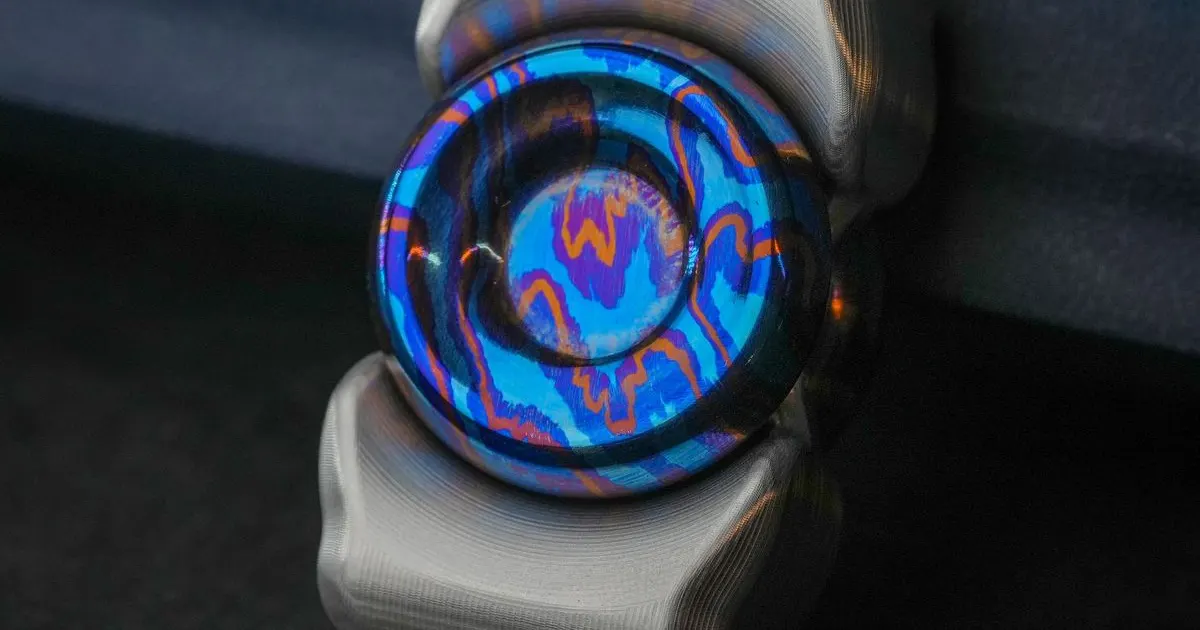
Every few group buys, someone proposes a titanium case. It is a beautiful idea. The metal is distinctive and it takes a coloured oxide finish that aluminium cannot. It also carries a premium that buyers recognise. It is also one of the most expensive ways to make a keyboard case, and the quote usually comes as a surprise.
This guide explains where the cost comes from, which grade to ask for and what finishes are practical, so that you can decide whether the case is worth building before you design it.
What makes titanium expensive
Three separate costs stack up, and each one is much larger than the aluminium equivalent.
The material. Titanium plate is expensive per kilogram, many times the price of aluminium, because the metal is hard to refine and to roll. A case begins as a block with most of it removed, so you pay for the whole block, and the offcuts have a low resale value.
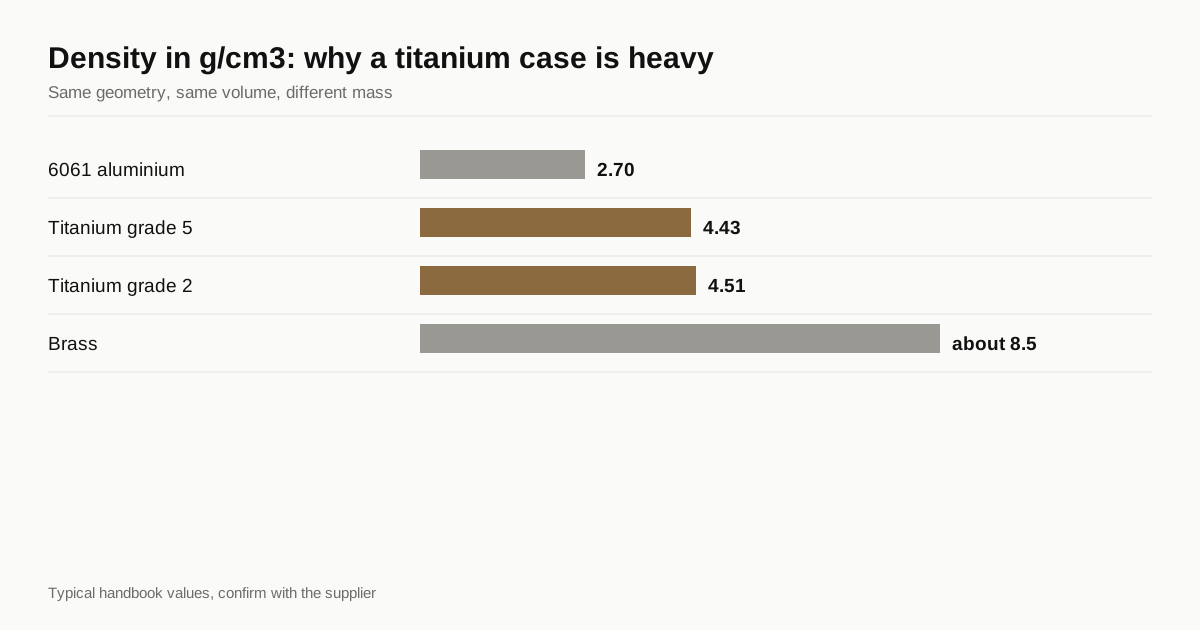
The weight. Titanium is about 1.65 times denser than aluminium. A case with the same geometry weighs about 1.65 times as much, and a block of the same size costs that much more in material mass alone, before the higher price per kilogram is counted.
The machining. Titanium conducts heat poorly, so heat from cutting stays at the tool edge instead of leaving with the chip. It also stays strong at temperature and tends to work harden if a tool rubs. The usual result is lower cutting speeds, faster tool wear, more tool changes and longer cycle times. A shop might run a surface speed for titanium that is a fraction of the speed it runs for aluminium.
Put together, the quote often arrives at several times the aluminium price for the same case. That is not a sign of a shop padding the number. It is the physics of the material.
The grades
Two grades cover almost all machined titanium parts.
| Property | 6061-T6 aluminium | Titanium grade 2 | Titanium grade 5 (Ti-6Al-4V) |
|---|---|---|---|
| Density | 2.70 g/cm³ | 4.51 g/cm³ | 4.43 g/cm³ |
| Tensile strength | about 310 MPa | at least 345 MPa | at least 895 MPa |
| Elastic modulus | about 69 GPa | about 105 GPa | about 114 GPa |
| Thermal conductivity | about 167 W/m·K | about 16 W/m·K | about 7 W/m·K |
| Machining effort | Baseline | High | Higher |
| Relative cost | Baseline | Several times | Several times, usually more |
Grade 2 is commercially pure titanium. It is softer and more ductile, easier to cut than grade 5 and often a bit cheaper. It takes surface finishes well. For a case, the strength is plenty.
Grade 5, also called Ti-6Al-4V, is an alloy with aluminium and vanadium. It is much stronger and is the standard grade for aerospace and medical parts. It is harder to machine and gives a bit more spring-back on thin walls. It earns its place if you have thin features or want maximum thread life.
Plate is commonly supplied against ASTM B265, which covers titanium sheet, strip and plate. That standard describes the stock and is not a promise from any shop about the finished case. If a shop quotes grade 5 when you wanted grade 2, the cost difference is part of the reason.
What the numbers mean in use
Two properties change how a titanium case behaves, and neither is quite what people expect.
It is stiffer, and it is heavier. The elastic modulus is higher than aluminium, so a titanium wall of a given thickness flexes less. The density is higher too. A titanium case weighs noticeably more than the same shape in aluminium and, per unit of weight, is about as stiff. The weight is part of the appeal for some buyers and a negative for others.
It feels warm. Because it conducts heat poorly, a titanium case warms to the hand much faster than aluminium and feels less cold on a winter desk.
Claims about sound deserve caution. The material affects the sound a little, but the mounting style, plate, foam and keycaps shape it far more. The mounting styles guide covers where the sound actually comes from.
What the weight does to the product
A quick calculation shows the effect. An aluminium case that weighs 1.2 kg as machined would weigh about 2.0 kg in grade 5 titanium if the geometry stayed the same, because 1.2 multiplied by 4.43 and divided by 2.70 comes to roughly 1.97. That is the case alone, before a PCB, plate, switches, keycaps and a weight are added.
A heavier board changes three practical things:
- Shipping. Parcel and freight cost follow weight, and a group buy shipping a few hundred boards feels the difference.
- Handling. A heavy case is harder to pick up and carry, and some buyers find a two kilogram board too much for a travel bag.
- Packaging. Foam and cartons for a heavy board need to be stronger, and a dropped parcel does more damage.
Many designers respond by thinning walls and pockets so the case lands closer to the aluminium weight. That is sensible, and it cuts machining time as well. It also makes the case a more specialised design, so check the walls against what the shop is willing to hold. If weight is the main objection, a hybrid with a titanium top and aluminium base is a common compromise.
Finishing titanium
Titanium offers finishes aluminium does not and lacks some that aluminium has.
| Finish | How it looks | Notes |
|---|---|---|
| Bead blasted | Soft, even grey satin | The standard clean look |
| Brushed or machined | Linear grain | Shows tool and brush marks |
| Heat or electrochemical colour | Gold, bronze, purple, blue, green | Colour set by oxide thickness |
| PVD coating | Black, bronze or other metals | Adds a hard thin layer, a separate vendor |
| Cerakote or similar | Solid coloured paint-like coat | Hides the metal look |
| Polished | Mirror grey | Scratches show readily |
Electrochemical colouring is the finish designers ask about most. The part is anodised in a bath at a set voltage, which grows a very thin transparent oxide film. The colour is an effect of light interfering within that film, not a dye, so the colour depends on thickness, which depends on voltage. The result is a spectrum of golds, purples, blues and greens that cannot be matched with dye.
The catch is consistency. A small change in surface preparation or voltage shifts the colour, and large parts show gradients across a face. A case is a large, flat and visible part, so a plan for approval samples and acceptance limits matters more than for aluminium. The principles in colour matching across a run apply with extra force.
PVD and similar coatings add a hard, thin colour layer and are described in PVD and Cerakote for keyboard parts.
Threads and screws
Titanium threads gall. When a titanium screw runs in a titanium thread, the surfaces can weld and tear, and the screw can seize. Shops and builders handle this in a few ways.
- Use steel or stainless screws in titanium threads, or titanium screws in a metal insert.
- Add anti-seize or a lubricant that is suitable for the part and approved for the finish.
- Use inserts at the screws that are opened often.
- Tighten gently. A seized screw is a lot harder to remove from titanium than from aluminium.
Tapping titanium takes slow, steady cutting with sharp taps, and a broken tap is a part scrapped. The options are compared in screw inserts and tapped holes.
Practical design changes that save money
You can bring titanium costs down somewhat without losing the metal.
- Make the case smaller or shallower. Volume and mass drive both material and machining time.
- Thin the walls. Titanium is strong, so walls can often be thinner than the aluminium equivalent.
- Reduce pocketing depth where nobody sees it.
- Choose grade 2 unless you need grade 5.
- Limit finishing steps. A blast with no coating is cheaper and lower risk than a coating that needs a second vendor.
- Consider a hybrid. A titanium top with an aluminium bottom, or a titanium weight on an aluminium case, gives the look at a fraction of the cost.
Run a quote for the full titanium case and for a hybrid, and compare. The difference often settles the question.
Choosing a shop
Titanium is not a metal every shop wants to cut. A few questions separate those who have done it from those who have not.
- Have you machined titanium cases or similar cosmetic parts?
- Which grade and which supplier standard is the quote based on?
- What is the scrap allowance, and how does it compare with aluminium?
- How do you handle the colour finish, and who does it?
- Can I see an approved sample before the run?
Before you order
- A reason for titanium, written down
- Grade stated: 2 or 5
- Quote requested in aluminium and in a hybrid for comparison
- Finish chosen and sampled
- Thread plan: inserts or steel screws
- Scrap allowance agreed
Titanium is one option in our guide to keyboard case materials.
If the numbers still make sense, send the files through the RFQ form and we will match them with shops that machine titanium for cosmetic work.
Frequently asked questions
How much more does a titanium keyboard case cost than aluminium?
Expect several times the price. Titanium plate costs far more per kilogram, the case is heavier for the same geometry and machining takes longer with faster tool wear. The ratio varies by shop and quantity, so ask for a quote in both materials on the same model.
Which titanium grade should I choose?
Commercially pure grade 2 is softer, easier to cut and often cheaper, while grade 5, also called Ti-6Al-4V, is much stronger and more common in machined parts. For a case, grade 2 is usually enough, and grade 5 is worth it only when thin features or thread wear matter.
Can titanium be anodised in colour like aluminium?
It can be coloured by anodising, but the colour comes from a thin oxide film whose thickness is set by voltage, not from dye. The palette is limited and consistency across parts takes careful process control.
Need a quote for your case?
Send the files. We match you with up to 3 shops that machine keyboard cases and reply within 24 business hours.
Get matched with a keyboard case shop