Guides / Materials
Machining Polycarbonate Keyboard Cases Without Cracks or Haze
October 21, 2026
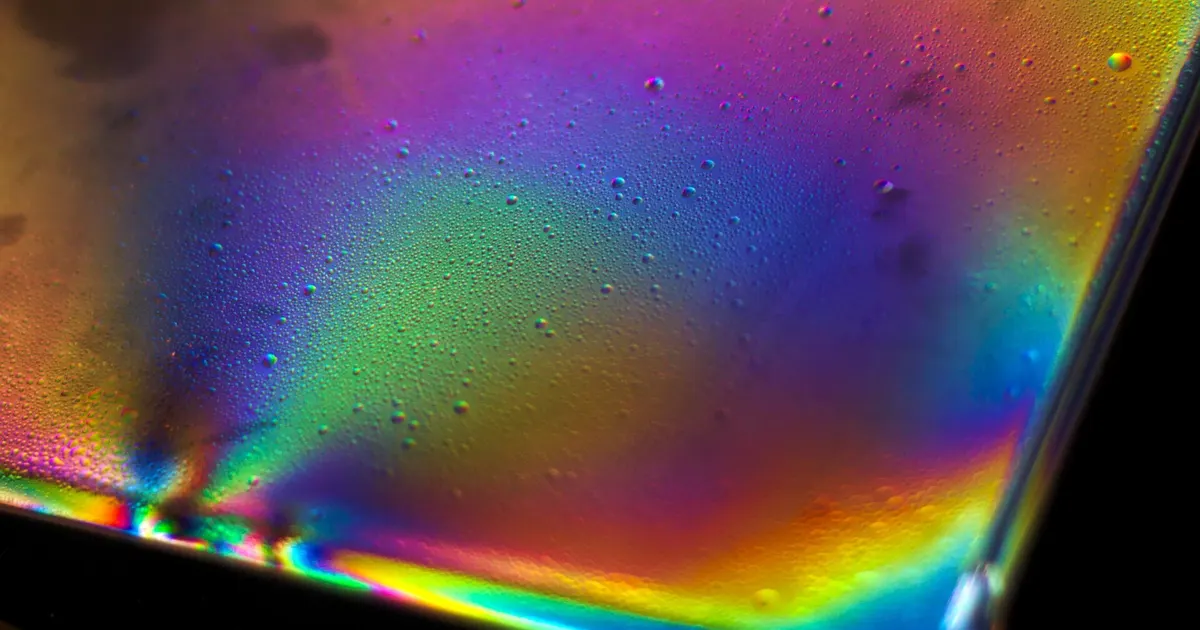
Polycarbonate looks like an easy material to machine. It cuts quickly, it does not fight the cutter the way titanium does and a block of it is cheap. Then the first cases arrive with a faint haze on the top face, or a hairline crack running out from a screw boss, and the cost of the cheap block shows up in scrap.
Polycarbonate fails differently from aluminium. The trouble is almost never the material. It is stress, heat and chemistry, and each one is something a good shop controls and a poor one does not know to watch. This guide covers what to ask for.
Why it behaves differently from aluminium
Aluminium conducts heat away, is hard and forgives a dull tool. Polycarbonate does the opposite in three ways that matter:
- It is a poor conductor of heat. Friction at the cutting edge heats the surface instead of passing into the part, and the plastic softens, smears and clouds.
- It stores stress. Sheet and block are made with internal stress from the way they are formed and cooled. Cutting releases some of it, adds more and can make parts move or crack.
- It is sensitive to certain chemicals. Some oils, cleaners and solvents attack the surface and start cracks, a failure called environmental stress cracking.
It also expands more with temperature. Polycarbonate grows roughly three times as much as aluminium for every degree of temperature change. On a 300 mm case, a ten degree swing in the shop moves the part by about two tenths of a millimetre, which is larger than a normal block tolerance. Measuring a case that has just come off a warm machine gives a different answer from measuring it a few hours later.
What goes wrong and why
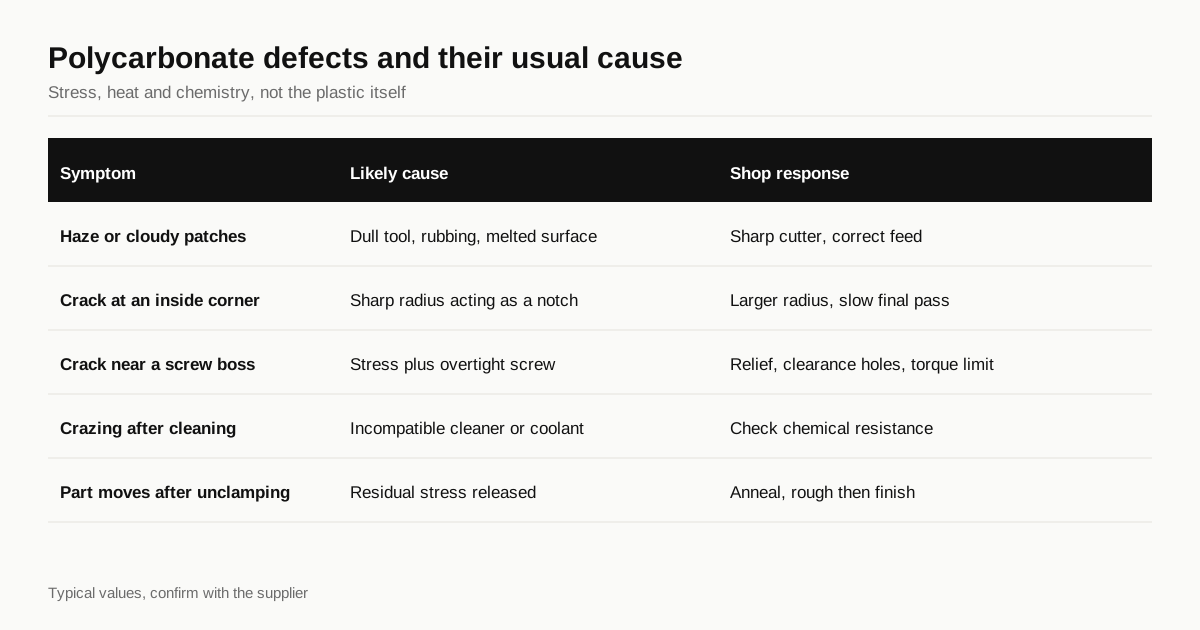
Most polycarbonate defects fall into a short list. This table pairs each symptom with its usual cause.
| Symptom | Likely cause | What a shop does about it |
|---|---|---|
| Haze or cloudy patches | Dull tool, rubbing, melted surface | Sharp cutter, correct feed, air or approved coolant |
| Melted burrs and stringy chips | Too much heat, wrong feed and speed | Faster feed per tooth, better chip evacuation |
| Crack at an inside corner | Sharp radius acting as a notch | Larger corner radius, slow finishing pass |
| Crack near a screw boss | Stress plus overtight screw or wrong insert | Stress relief, clearance holes, torque limit |
| Crazing after cleaning | Incompatible cleaner or coolant | Check chemical resistance, use a compatible agent |
| Part moves after unclamping | Residual stress released | Anneal, rough then rest then finish |
| Size drifts between measurements | Temperature change | Measure at a stable temperature |
None of these is exotic, and a shop that handles plastics regularly will recognise every row.
Tooling and cutting
A shop machining polycarbonate should be using tooling made for plastics, not the same cutters it uses for aluminium.
- Sharp, polished cutters. A single flute cutter with a polished flute and a high positive rake cuts the plastic cleanly and clears chips. A cutter with some wear rubs rather than cuts, and rubbing is what makes haze.
- Chip evacuation. Chips that stay in the cut get re-cut and melt. Air blast or a vacuum clears them, and so does a suitable coolant.
- The right feed. Feeding too slowly rubs and heats the surface. A shop should be running higher feed per tooth than a metal job would suggest.
- Light final passes. A small final cut with a sharp tool leaves a surface close to its final clarity and little new stress.
- Gentle clamping. A part held hard in a vise can crack or distort, and the stress shows up later.
If you are asking a shop whether they have run polycarbonate before, ask what they do for chip evacuation and what coolant they use. A confident answer tells you more than a generic yes.
Coolant and cleaning
The coolant is a common cause of late failures. Some coolants, oils and cleaning agents attack polycarbonate and start fine cracks that appear hours or days after machining. Others are fine.
Ask the shop three questions:
- Do you use coolant, air or a mist? Dry cutting with air blast is common for thin parts and avoids the question altogether.
- If coolant, which one and has it been checked for polycarbonate? The material supplier publishes chemical resistance information for their sheet, and the shop can check against it.
- How is the part cleaned? A strong solvent wipe at the end can undo careful machining.
The same caution applies to anything you apply later. Adhesives, thread locker, labels and some lubricants should be checked against the supplier’s chemical resistance sheet before use.
Stress relief
Residual stress is the invisible reason polycarbonate cases crack. A common approach for thick parts or deep pockets is annealing, which means heating the part in an oven to a temperature below softening, holding it and cooling it slowly. The typical range sits roughly between 120 and 130 degrees Celsius for polycarbonate, but it depends on the grade and the thickness, so the supplier’s data sheet decides.
A shop may handle it in different ways:
- Anneal the blank before machining, so the part starts relaxed.
- Rough, rest and finish. Cut most of the material, leave the part for a period to let it move, then finish to size.
- Anneal after machining to relax the stress the cut itself added.
Shops differ on which they use and thin or simple parts may not need it. The question to ask is whether the shop has a method and can explain it.
Corners, bosses and screws
Design decides more of the cracking risk than machining does.
- Radius every inside corner. A sharp internal corner acts as a notch, and a crack that starts there runs. A radius of one millimetre or more is a practical minimum, and larger is better.
- Leave thicker walls around screw bosses. Screws load the plastic, and a thin boss cracks first.
- Use clearance holes where you can. A screw cutting its own thread in plastic creates stress, and a metal insert or a tapped hole with controlled torque spreads the load. The trade-offs are covered in screw inserts and tapped holes.
- Limit torque. An overtight screw can crack a polycarbonate boss days later.
Polycarbonate will not be anodised, so any colour comes from the resin or a coating. That changes the look and the finishing plan, and it is one of the trade-offs in the plate material guide, where polycarbonate plates are discussed.
Getting a clear finish
A clear polycarbonate case is attractive and it is where haze shows most. A cutter alone rarely leaves a perfectly clear surface. A shop that wants clarity polishes, and there are several routes.
- A fine final cut with a sharp tool gives a good surface on flat faces.
- Mechanical polishing with progressively finer compounds raises clarity but takes time and needs care not to overheat.
- Vapour polishing, where the surface is briefly exposed to a solvent vapour that smooths it, gives high clarity but must be done by a shop with the equipment and the safety controls. It can also introduce stress and cracking risk if done wrongly.
Polycarbonate scratches more easily than acrylic. A clear case shows every handling mark, so ask how parts are protected between the cut and the box. A protective film on faces until the last moment is a simple and effective answer.
Questions to ask a shop
- Have you machined polycarbonate keyboard cases before, and how many?
- Which cutter do you use, and how do you clear chips?
- Which coolant or cleaner, and has it been checked for polycarbonate?
- Do you anneal, and when?
- How do you polish and protect clear faces?
- What is your scrap allowance, and is it different from aluminium?
Before you order
- Inside corners radiused, one millimetre or more
- Screw bosses thick enough, with inserts or clearance holes
- Coolant and cleaner checked against the sheet supplier’s chemical sheet
- Stress relief method agreed
- Polishing and protective film agreed for clear faces
- Measurement temperature stated
Polycarbonate is one choice in our guide to keyboard case materials.
If you are planning a polycarbonate run, send the files through the RFQ form and we will match them with shops that machine plastic as well as aluminium.
Frequently asked questions
Why does a polycarbonate keyboard case crack after machining?
The usual cause is stress locked into the material or created by the cut, combined with a sharp inside corner or a chemical that attacks the surface. The crack may appear days later, once a screw, a coolant residue or a cleaner has started it.
Can polycarbonate be machined to a clear polished finish?
Yes, but not straight off the cutter. Sharp tooling and light final passes leave a surface that is close, and a polishing step gives clarity. The step has to be done by a shop that has the equipment and has done it before.
Do I need to anneal a polycarbonate case?
Annealing relieves stress and lowers the risk of cracking, particularly for thick parts with deep pockets. Whether it is needed depends on the geometry and the material supplier's data, so ask the shop what they do and why.
Need a quote for your case?
Send the files. We match you with up to 3 shops that machine keyboard cases and reply within 24 business hours.
Get matched with a keyboard case shop